Instagram vs Threads vs LinkedIn in 2026: Which Platform Actually Converts for B2B Brands
Instagram vs Threads vs LinkedIn in 2026: Which Platform Actually Converts for B2B Brands
In the past, social media meant being seen. In 2026, it means being responsible. B2B brands don’t just want impressions or engagement anymore. Every post, campaign, and platform should help the pipeline grow and make money. Choosing a platform is now much more strategic than it used to be.
People are no longer arguing about which platform is better overall when it comes to Instagram vs. LinkedIn 2026. It’s about which platform works best at each step of the buyer’s journey. Threads for business-to-business (B2B) use cases have also come up, which makes things even more complicated.
Brands need to look at three platforms not just by how popular they are, but also by how well they do in terms of reach, engagement, cost, and most importantly, lead quality.
The Role of Each Social Media Platform in 2026
LinkedIn is still the best place for B2B conversions. It’s where decision-makers actively read industry news, compare vendors, and interact with professional content. The intent level on LinkedIn is much higher than on any other social media site, which is why it always brings in the best leads. When a user interacts with content here, they are far more likely to be in a business mindset, making conversions more predictable.
Instagram operates very differently. It excels at grabbing attention and building familiarity. In 2026, business-to-business buyers don’t just use professional platforms. They find brands when they are browsing on their own time, often through short videos. Instagram is great at making brands seem more human, building trust, and staying top of mind. However, there is still a clear gap between engagement and conversion. High engagement doesn’t always lead to immediate business results.
Threads, on the other hand, is still evolving. It has set itself up as a conversation-driven platform where brands can talk to their audience in a more relaxed way. For B2B companies, Threads is a chance to build early authority and try out different types of content. But it doesn’t have the maturity, targeting precision, or advertising infrastructure needed to consistently generate leads. Right now, it works more as a support channel than a main source of conversions.
Reach and Visibility Across Platforms
When it comes to raw reach, Instagram is the best. Its algorithm, especially through Reels, lets brands reach people who aren’t already following them. This makes it a great tool for campaigns to raise awareness and find new brands.
LinkedIn has a more targeted way of reaching people. It might not have as many users as Instagram, but it makes up for it with how useful it is. Professionals see content based on their industry, role, and interests. This makes it more likely that the right people will see it. For B2B brands, this kind of targeted visibility often works better for business than a wider reach.
Threads has a moderate reach right now and some early stage benefits. There is less competition on the platform than on Instagram and LinkedIn because it is still growing. This benefit is slowly going away as more brands enter the market, though.
Engagement Trends in 2026
Engagement remains a key indicator of content performance, but its meaning has evolved. It is no longer just about likes or comments, but about meaningful interaction.
LinkedIn stands out with high quality engagement. Comments often turn into discussions, and posts can generate direct business conversations. This type of engagement is highly valuable for B2B brands because it reflects genuine interest.
Instagram delivers strong engagement rates, particularly with visual and video content. However, much of this engagement is passive. While users may interact with content, they are less likely to convert immediately, especially in complex B2B scenarios.
Threads encourage active participation. Conversations, replies, and real time interactions are common. This creates a sense of community, but it does not always translate into measurable business outcomes yet.
Advertising Costs and Efficiency
Cost plays a crucial role in platform selection, but it must be evaluated alongside returns. Instagram remains one of the more cost effective platforms for advertising. It offers relatively lower costs for impressions and clicks, making it ideal for brand awareness and audience building campaigns.
LinkedIn is significantly more expensive in terms of cost per click and cost per lead. However, the higher investment is often justified by the quality of leads generated. Businesses are essentially paying a premium to access decision makers directly.
Threads is still in its early stages when it comes to advertising. Limited options and lack of advanced targeting make it less reliable for paid campaigns at the moment.
Lead Quality and Conversion Potential
This is where the difference between platforms becomes most evident.
LinkedIn consistently delivers the highest lead quality among all three platforms. Users are already in a professional mindset, which reduces the gap between interest and action. As a result, conversion rates are significantly higher.
Instagram generates a larger volume of leads, but many of them are lower intent. It works best as a nurturing platform where potential customers become familiar with a brand before moving to a more conversion focused channel.
Threads is not yet a strong performer in terms of direct lead generation. Its value lies in building relationships and influencing early stage perception rather than closing deals.
Making the Right Choice for Your Business
Choosing the right platform depends on your business goals, sales cycle, and target audience.
If your primary goal is direct lead generation and conversions, LinkedIn should be your main focus. If you want to build brand awareness and stay relevant in the minds of potential buyers, Instagram is essential. If you are looking to experiment with new formats and build early community engagement, Threads can be a valuable addition.
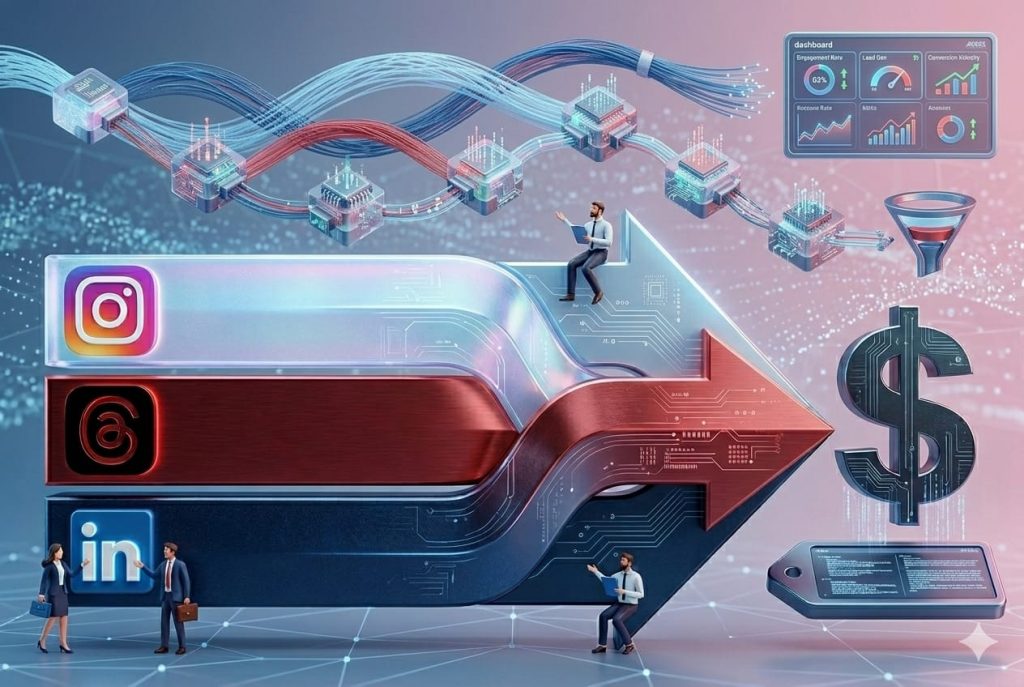
However, the most effective strategy is not choosing one platform over another. It is about integrating them into a cohesive system. High performing B2B brands in 2026 use Instagram to attract attention, LinkedIn to convert that attention into leads, and Threads to maintain ongoing conversations. This approach aligns with how modern buyers interact with multiple platforms before making a decision.
The Strategic Advantage Most Brands Miss
One of the biggest mistakes businesses make is treating social media platforms in isolation. Without a structured approach, even the best platforms fail to deliver consistent results.
Execution matters more than presence. Content quality, audience targeting, and funnel alignment determine whether social media becomes a cost center or a growth engine. This is where working with a specialized team can make a measurable difference. Companies like Techco focus on building performance driven social media systems that connect engagement with actual business outcomes, ensuring that every platform contributes to revenue.
Conclusion
There is no clear winner between Instagram, LinkedIn, and Threads in 2026. Each platform in the B2B marketing ecosystem has its own job. LinkedIn is the best site for conversions. Instagram is great for getting people to know about you and trust you. Threads gives people new ways to talk to each other and get involved early.
Brands that know how to use each platform in a smart way and understand these roles are the ones that do well. The better question is not which platform is best, but how can each platform work together to make growth steady and measurable?